Fact 01 / Speaker identification
The caller identifies herself as Megan Coy.
The full recording begins: “Hi, my name is Megan Coy.” Visitors can listen to the censored-address recording and compare it with the transcript below.
Megan Coy wants to represent you in Columbus. But when it mattered, she told a legislator to skip the vote entirely.
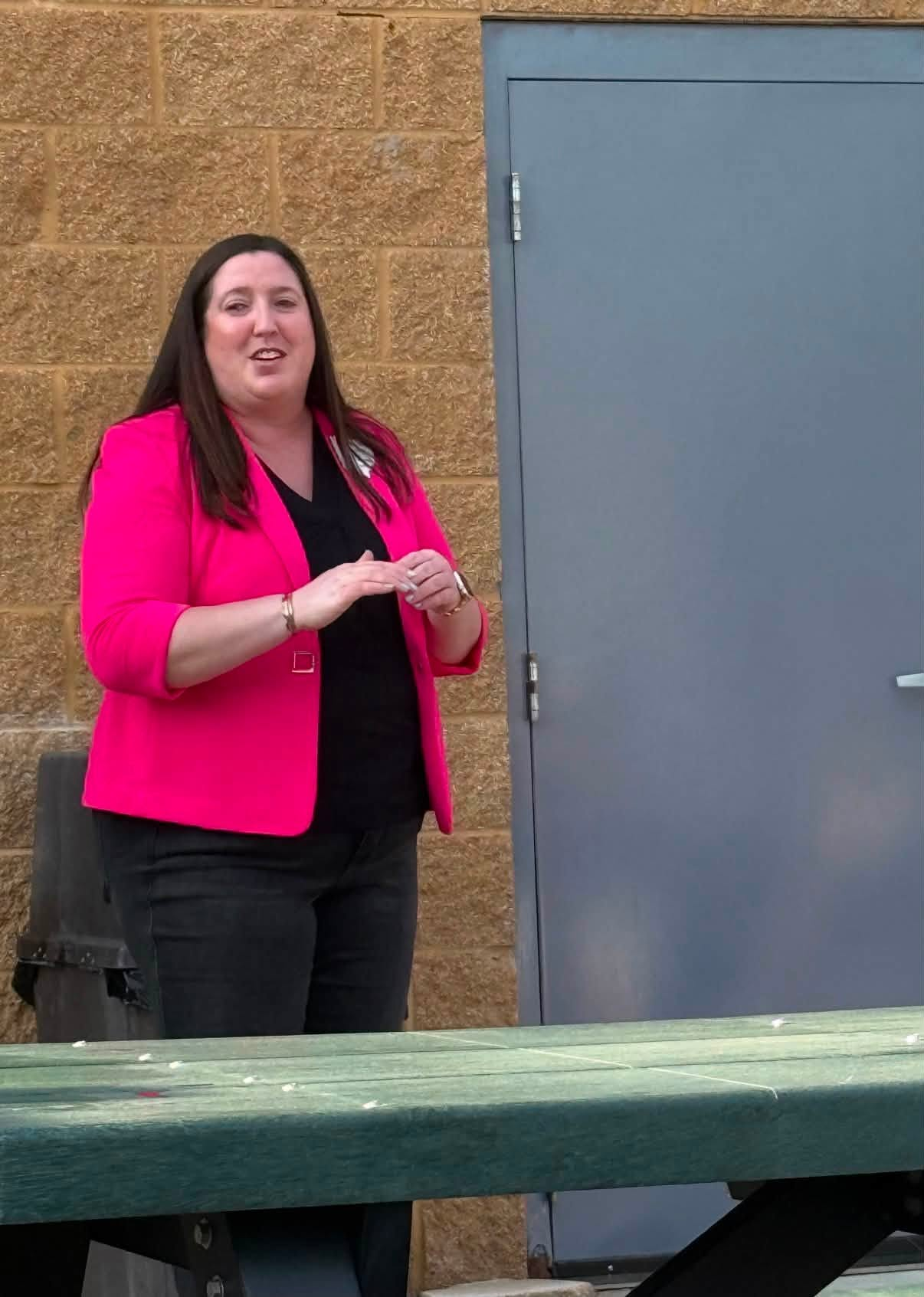 Megan Coy
“DON’T VOTE AND DON’T EVEN GO TO SESSION.”— Megan Coy, recorded voicemail
These are the narrow, verifiable claims underlying this page. The recording is the primary source; official Ohio records provide the legislative context.
The full recording begins: “Hi, my name is Megan Coy.” Visitors can listen to the censored-address recording and compare it with the transcript below.
The recording includes: “don’t vote and don’t even go to session today,” followed by the alternative of voting no on overriding the vetoes.
HB 96 was Ohio’s FY 2026–2027 operating budget. The official legislative record shows the governor’s line-item veto receipt and later override votes. View official status.
The audio documents Coy’s request concerning all the governor’s budget vetoes. Statements about courage, accountability, or fitness for office are this site’s political argument—not quotations from an official source.
Primary evidence: the voicemail hosted on this page. Legislative sources: Ohio Legislative Service Commission budget documents, HB 96 documents and veto message, and official vote history.
Representatives are elected to show up, study the issues and cast a vote. Coy’s own voicemail argues for the opposite.
Coy explicitly asked an elected representative not to attend session and not to vote on overriding the governor’s budget vetoes.
The veto package included provisions connected to property-tax relief—exactly the kind of kitchen-table issue voters send representatives to Columbus to decide.
Ohioans deserve a representative who will take a position on the record, not encourage public officials to avoid accountability.
Why should the people of House District 17 believe Megan Coy will fight for them when the pressure is on?
Coy didn’t ask lawmakers to consider each veto on its merits. She asked them not to override any of the governor’s budget vetoes—and even suggested skipping the session. That sweeping request covered measures like these:
The vetoed package included limits on certain levy combinations, new ballot information about school-district reserves, and restrictions on asking taxpayers for additional current-expense levies when a district held very large carryover balances.
One vetoed appropriation would have provided a $110-per-treatment Medicaid rate add-on for dialysis delivered to nursing-home residents—backed by $700,000 in FY 2026 and $1.4 million in FY 2027.
A vetoed provision would have required Medicaid hospitals with maternity units to enter requested transfer agreements with freestanding birthing centers within 30 miles, establishing procedures for immediate transfers when complications arise.
Another vetoed provision would have ended new agreements granting sales-and-use-tax exemptions for qualifying computer data-center equipment after October 1, 2025, while preserving existing agreements.
Sources: Ohio Legislative Service Commission, H.B. 96 final analysis and vetoed-items comparison: official budget documents. These descriptions summarize vetoed provisions; reasonable people may disagree about their policy effects.
Transcript lightly edited for punctuation and readability. Audio is the controlling source.
Public office takes backbone. Megan Coy’s own words tell voters exactly what she thinks public officials should do when a hard vote comes: don’t show up.